Crews
Build AI capability inside your team’s real work.
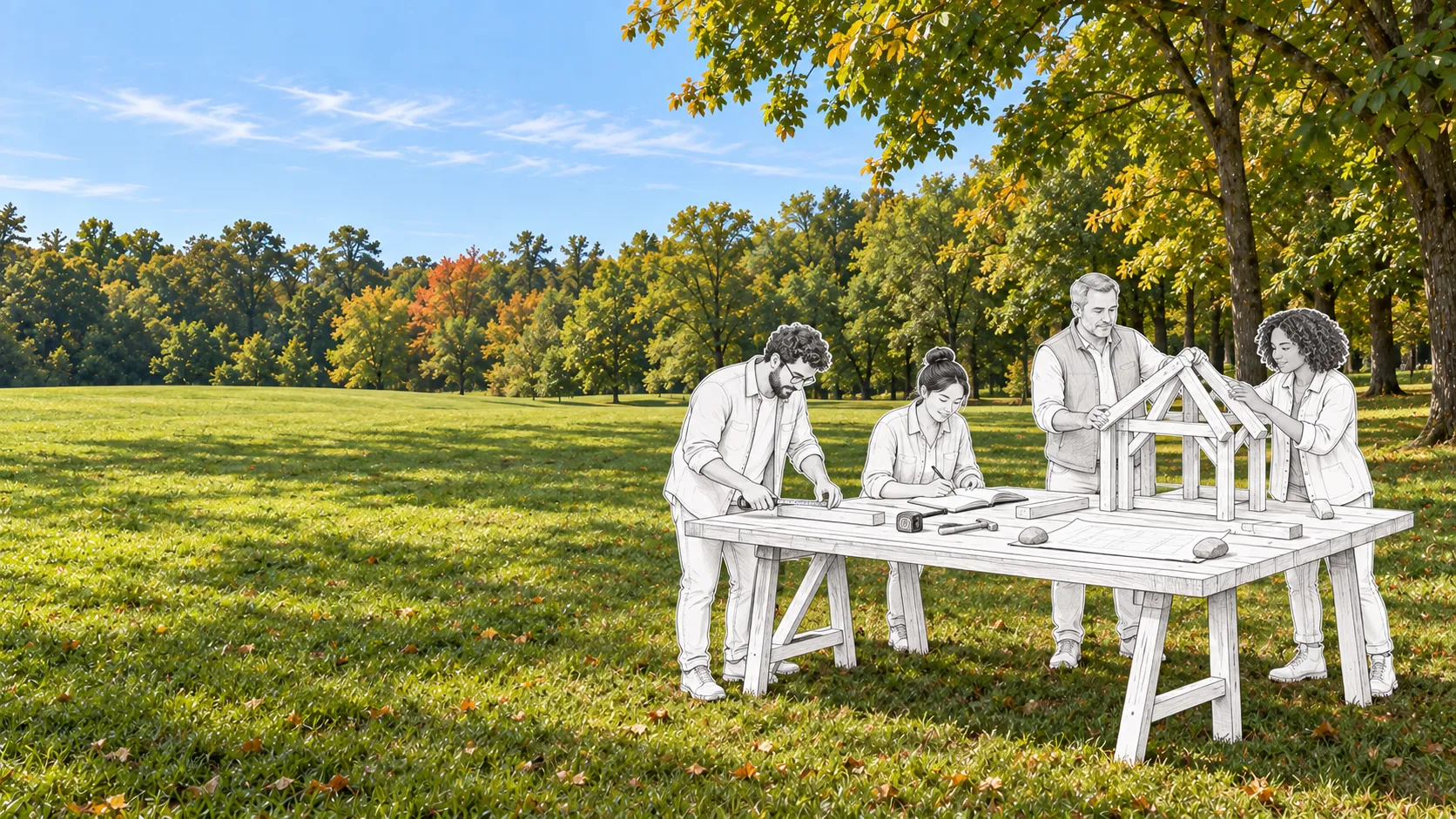
A Crew brings a small group of colleagues from one team together for six sessions with one of our educators. Everyone works on their own responsibilities, so what they build is useful in their job right away.

What a Crew is
People learn AI faster when they can see the work around them.
It’s easier to try something new in front of colleagues who already respect your expertise. Every part of a Crew is built around that idea.
Relevant by design
Everyone works within the same functional context, so examples and feedback travel easily.
Practice in the open
Bring unfinished work into the room, test an approach, and improve it with support.
Capability that stays
The team leaves with examples and relationships it can keep using as the tools and work evolve.
The six weeks
Six professional skills, rebuilt for how work gets done now.
Every Crew runs on your team’s own work from the first session. Each week builds a skill that makes people better at their jobs, with AI as the way they practice it.
- Week 1
Framing the work
- The shift
- From “AI is something I try on a task” to “I know where it belongs across my whole job.”
- In your role
- Seeing your work clearly enough to decide what deserves your time, and how to approach each piece before you start.
- Week 2
Delegating well
- The shift
- From hunting for the perfect prompt to directing capable help the way a good manager does.
- In your role
- Knowing what great looks like, explaining it so someone else can deliver it, and capturing it so it holds up next time.
- Week 3
Communicating for the reader
- The shift
- From “more is better” to “exactly what this person needs, and nothing more.”
- In your role
- Understanding the people who receive your work and handing them something they can act on.
- Week 4
Analytical judgment
- The shift
- From “data is for analysts” to “I can question anything my team collects.”
- In your role
- Starting with a real question, reading the evidence honestly, and knowing when a finding is strong enough to act on.
- Week 5
Creating with care
- The shift
- From “AI writing sounds like AI” to “it sounds like us, and it’s right.”
- In your role
- Turning what you know into work people trust: accurate, considered, and in a voice that’s yours.
- Week 6
Building work that lasts
- The shift
- From one-off conversations to work that keeps running.
- In your role
- Designing how recurring work gets done so it runs reliably, improves over time, and doesn’t depend on you remembering.

“Rather than staying at a high level, Armen went deep in the ways that mattered most.”
Deploy Crews by team
One team at a time, across the whole organization.
Crews work best with a small group of people from a single team.
Start with one team, then extend the model. Every session runs on the work that team owns, so each Crew feels specific to the people in it.
People & Culture
Policy questions, onboarding, survey analysis, program design, and the documentation behind every people process.
PR & Communications
Announcements, leader messaging, media preparation, and keeping a growing organization aligned.
Marketing
Campaign planning, content development, and turning research into clear positioning.
Sales
Account research, call preparation, and proposals shaped around each buyer.
Customer Success & Support
Response drafting, knowledge base upkeep, and spotting patterns across requests.
Finance
Reporting narratives, variance commentary, and reconciling information from many sources.
Legal & Compliance
Review preparation, policy comparison, and clear internal guidance.
Operations
Process documentation, vendor coordination, and the recurring reporting that keeps work moving.
Product & Design
Specs, research synthesis, release notes, and making sense of feedback from every channel.
Frontline & Field Teams
Shift handoffs, inspection and safety reports, procedures, and training built for people away from a desk.
Don’t see your team?
If a group of colleagues shares related work, we can shape a Crew around it. Tell us about them
Week to week
The work continues between sessions.
Each week begins with what participants tried, where the work held up, and where they got stuck.
- 01
Bring real work
Arrive with a task, input, or challenge from your role.
- 02
Build together
The educator introduces a practical method and helps you apply it while the group learns from the process.
- 03
Use it during the week
Leave with a manageable next step connected to work you already need to do.
- 04
Return and improve
The group shares what happened, learns from the differences, and carries it into the next session.

How we scope a Crew
Built around your tools, standards, and priorities.
Before the Crew begins, we work with the people responsible for the team, learning, and technology. Together we agree on what participants should bring, which tools they use, the guidance they follow, and the outcomes worth pursuing.
- Available and approved tools
- Relevant roles and recurring responsibilities
- Priority workflows
- Quality, privacy, and review expectations
- Existing examples and internal expertise
- Practical evidence of progress
Your organization owns its tool and policy decisions. We turn them into guidance your people can use day to day.
Guided Walks
Keep the whole organization learning alongside.
Crews go deep with one team. Guided Walks give everyone a regular, focused session on what’s changing and how to put it to use.

Which team could start first?
Tell us about the work your teams own, the tools available to them, and where you want people to grow. We’ll help find a useful starting point and shape a Crew around it. Crews are running with a small group of pilot partners, so each one is shaped closely with your team.